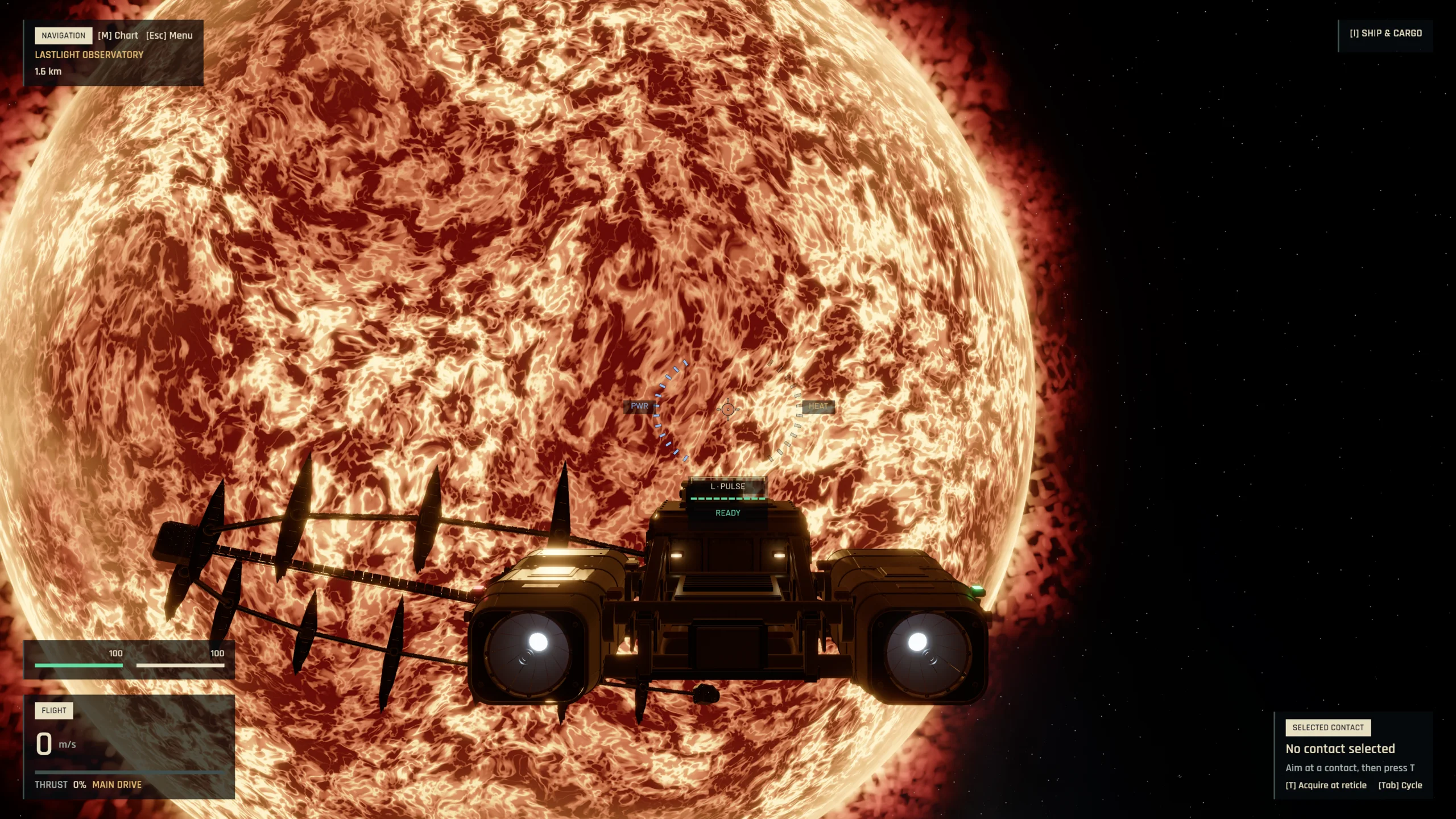
I recently asked for Spacelancer’s stations to have several credible landing places for different ship sizes, including full fighter bays where appropriate. The resulting Lastlight Observatory model kept an appealing instrument silhouette, but acquired disconnected parking pads and shallow additions that looked like storefronts. I could see places to put a ship. I couldn’t see how someone arriving at an outlying pad would reach the station.
The model had passed clearance checks, but those checks answered whether a hull fit in a space. They did not establish a plausible route into an inhabited building. We already had broad guidance for going from concept to model; what was missing was a consistent set of production references and a review of the basic architecture before detailing began.
I asked to step back, agree on the references and then give a modeler those images to follow. That also seemed worth capturing for the next asset. The result is a repository skill describing how to take a 3D asset through a professional production process adapted to this small project.
A skill is a set of reusable instructions an agent can read when a task calls for them. This one contains the brief, the decisions that need review, the references a modeler should follow and the problems that should be raised before proceeding. It also records which versions were reviewed and what remains unresolved, so a later agent session can continue from the decisions already made.
The work starts with purpose and function: what the pilot should recognize, how large the object is and how it operates. For a station, that includes routes for people, cargo, maintenance, power and heat. Faction identity affects those choices. An observatory’s separated instruments and protected inhabited spaces need an explanation that survives a change of paint.
After choosing a concept, the reference package resolves the same design across the necessary views, including hidden connections and scale. The modeler gets the actual images, dimensions and constraints. Contradictory views or impossible clearances should be raised with the lead instead of being silently worked around. A simple blockout then gives us something inexpensive to inspect before detailed modeling.
Surface development gets an early review too. One representative section should establish the materials, texture scale, light emission and small mechanical details before they repeat across the station. Broad quiet surfaces and variation between assemblies help a large object feel constructed. The sample also needs to survive export into the game; a finish that works only under the modeling tool’s lighting still leaves a production problem to solve.
Those handoffs give the art lead, modeler and integration agent specific responsibilities. The lead reviews the actual blockout and material sample against the references. The modeler preserves the agreed forms and raises conflicts. Integration checks the exported asset, its cost and its appearance from the pilot’s cameras. Passing a file check, passing a game test and getting human approval remain separate results.
This matters as the project grows beyond a demonstration. An improvised choice can spread through a whole asset before anyone notices it, and the reasoning can disappear when an agent session ends. Keeping the brief, reference versions and review decisions beside the source makes that work easier to inspect and continue. It gives us a place to retain judgment that would otherwise stay in a conversation.
The process needs to fit the change. A local roughness fix should reopen the affected surface review, including other objects using that material. It should not require redesigning the station. Lastlight’s missing connections are a different kind of problem: those need to return to the architecture before more detail is added.
The skill draws on published studio and technical guidance, adapted to our scope. It cannot provide taste or domain expertise on its own, and a checklist can be rubber-stamped as easily as a confident status report. Its usefulness depends on inspecting the work, taking feedback seriously and making a decision at each review.
The new skill has been validated and exercised by another agent against three scenarios. The Lastlight redesign has not yet been built or accepted, and broader Spacelancer implementation remains paused. We have a more explicit process to try; whether it produces a better station is still ahead of us.